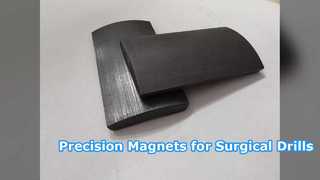
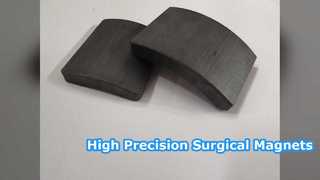
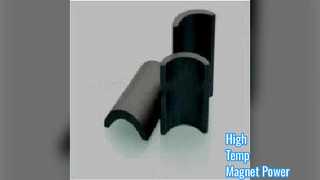
Brief: Let’s dive in — see this solution in action and notice the key moments. In this video, we explore the high-temperature performance of our Sintered Ferrite Magnet, demonstrating its reliable operation in demanding applications like medical devices. You'll learn how its strong coercivity and thermal resilience make it ideal for precision tools such as nasal suction cutters, shaver systems, and surgical power drills.
Related Product Features:
Sintered Ferrite Magnet with a maximum operating temperature of 250°C for high-heat environments.
Coercivity range of 235-275 KA/m ensures strong and stable magnetic performance.
Maximum working temperature up to 200°C, suitable for diverse industrial and medical applications.
Customizable dimensions and transport packaging to meet specific client requirements.
Anisotropic magnetic property allows for flexible magnetization directions.
Density of 4.8-5.2 G/cm3 contributes to durability and consistent magnetic strength.
Ideal for use in motors, sensors, speakers, and critical medical equipment like surgical drills.
Model number follows general industry standards for easy integration and replacement.
FAQs:
What is the maximum working temperature of this sintered ferrite magnet?
The sintered ferrite magnet has a maximum working temperature of up to 200°C, with an operating temperature capability of 250°C, making it suitable for high-temperature industrial and medical applications.
Can the dimensions and packaging of the magnet be customized?
Yes, both the dimensions and the transport package can be fully customized to meet your specific application and handling requirements, ensuring optimal integration and safe delivery.
What medical devices commonly use this type of ferrite magnet?
This magnet is widely used in precision medical tools such as nasal suction cutters, shaver systems, and surgical power drills, where reliable magnetic performance and heat resistance are critical.
What does the coercivity range of 235-275 KA/m indicate?
This coercivity range signifies the magnet's resistance to demagnetization, ensuring it maintains strong and stable magnetic properties even under demanding operational conditions.